
Living in Weston, MA: Luxury Homes, Lifestyle & Real Estate Guide
Weston, Massachusetts offers substantial land, privacy, distinctive architecture, and convenient access to Greater Boston. Located about 15 miles west of Boston, the town provides a quieter residential setting while remaining close to Wellesley, Newton, Waltham, Lincoln, and Wayland. Weston real estate includes historic homes, custom properties, major renovations, and multimillion dollar estates. Paul Neavyn’s luxury real estate experience and 20+ years as a licensed general contractor give buyers valuable insight into construction quality, property condition, and potential improvements.
Why Live in Weston, Massachusetts?
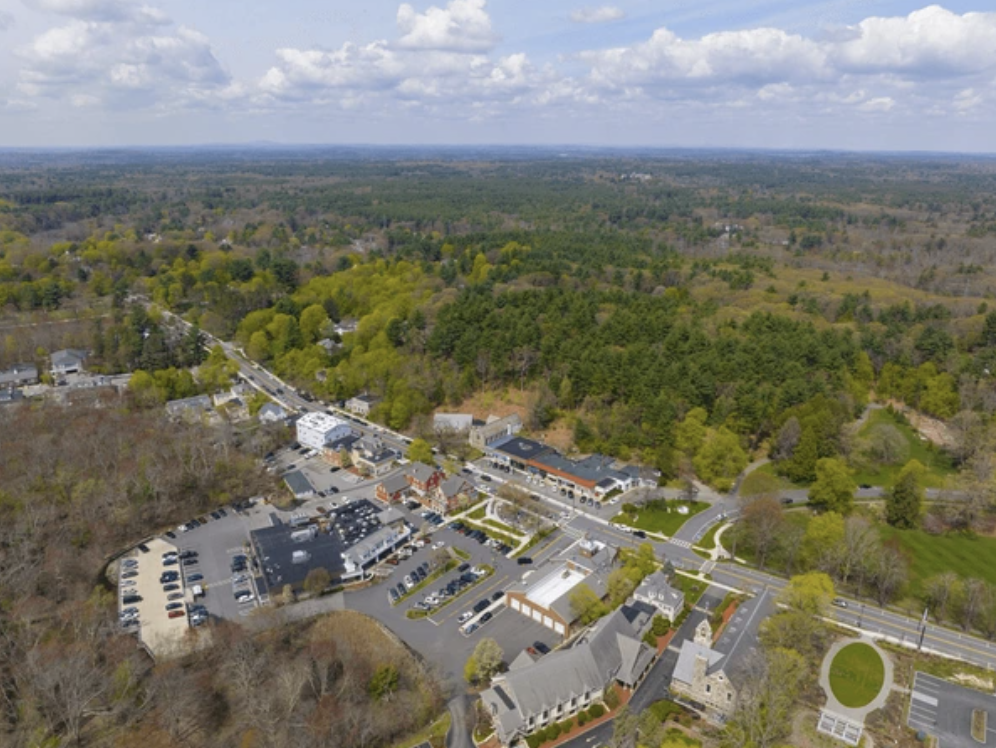
Weston feels noticeably different from many communities located this close to Boston. Instead of developing around a dense commercial downtown, the town has retained a predominantly residential character shaped by larger properties, wooded roads, historic architecture, conservation land, and open space.
Residents commonly travel to nearby Wellesley, Wayland, Newton, Waltham, and other surrounding communities for restaurants, shopping, and everyday services. In return, Weston provides something that can be difficult to find near Boston: space and privacy.
For buyers who value a quieter setting, larger lots, access to nature, and the ability to own a substantial property without moving far from the city, those characteristics can be a major part of Weston's appeal.
Privacy, Land and Larger Properties
Large residential lots are one of the defining characteristics of Weston real estate. Two acre properties are common in parts of town, while some homes occupy considerably more land. Mature trees, stone walls, conservation areas, wooded roads, and long private driveways can create a level of separation that is increasingly difficult to replicate in denser Greater Boston communities.
Larger properties can also provide opportunities for outdoor entertaining, gardens, pools, sports courts, guest accommodations, and other improvements. At the same time, owning more land means there is more to evaluate before purchasing. Topography, drainage, grading, septic systems, landscaping, mature trees, driveways, accessory structures, and future improvement potential can all affect the property's value and long term ownership costs.
Conservation and Outdoor Recreation
More than 2,000 acres of conservation land contribute significantly to Weston's character. Residents have access to trails and open spaces through forests, meadows, wetlands, and other natural areas. Jericho Town Forest, Cat Rock Park, Doublet Hill, and the Mass Central Rail Trail are among the recreational resources available in and around Weston.
The Mass Central Rail Trail passes through northern Weston and connects with neighboring Wayland and Waltham. During the winter, the Leo J. Martin Golf Course also serves as the Weston Ski Track. For many buyers, these spaces are more than recreational amenities. Access to conservation land and outdoor areas can be one of the reasons they choose Weston in the first place.
Convenient Access Without Urban Density
Weston's location provides an important balance between residential privacy and regional accessibility. I-95/Route 128 and the Massachusetts Turnpike provide connections to Boston and employment centers throughout Greater Boston.
The town is also served by MBTA Fitchburg Line stations including Kendal Green, Hastings, and Silver Hill, providing commuter rail service toward Boston's North Station. For professionals working in Boston, Cambridge, Waltham, the Route 128 corridor, or other nearby employment centers, Weston can offer substantial residential space without requiring a move far from the region's economic center.
Weston is predominantly a single-family home market, with properties spanning a wide range of architectural periods, sizes, construction styles, and levels of luxury. Buyers may encounter historic and antique homes, Georgian and traditional Colonials, contemporary residences, extensively renovated older properties, custom new construction, multi-acre estates, equestrian-oriented properties, and homes with pools, guest accommodations, conservation access, or substantial outdoor living areas.
Weston is firmly positioned toward the higher end of the Greater Boston housing market. Smaller or older properties may occasionally provide a lower point of entry, but the market includes substantial inventory in the multimillion-dollar range, including properties priced above $3 million, $5 million, and occasionally $10 million.
At these price points, square footage alone provides an incomplete picture of value. Two homes of similar size can have substantially different values based on acreage, privacy, road and property location, architectural quality, construction quality, renovation history, major systems, site work, outdoor amenities, conservation adjacency, builder reputation, and future improvement potential.
For buyers, that means automated valuations and price per square foot calculations may not fully explain whether a particular Weston property represents good value. For sellers, it means pricing a property requires more than simply identifying a few nearby sales and applying an average.
Buying a Weston Home? Look Beyond the Finishes.
Luxury homes can be beautifully presented, but appearance does not always tell the full story about construction quality or previous renovations. When evaluating a Weston property, buyers should consider the condition of the foundation and structural systems, roofing, electrical capacity, plumbing, HVAC and other mechanical systems, drainage, grading, septic systems, previous additions, windows, the building envelope, site work, pools, outdoor structures, and the property's potential for future improvements.
This is where Paul's background as a licensed general contractor can provide a different perspective. With more than 20 years of construction experience in addition to his real estate work, he can help buyers recognize questions worth investigating before they become emotionally committed to a property.
That perspective does not replace a professional home inspection, engineering assessment, or other specialized evaluation. Instead, it can help buyers approach a property with better questions from the beginning and understand which issues may warrant additional professional review.
New Construction and Luxury Real Estate in Weston
New construction is an important part of Weston's luxury housing market. The availability of larger lots creates opportunities for custom homes and estate-scale construction that can be increasingly difficult to find in communities closer to Boston.
Buyers evaluating new construction should look beyond finishes, staging, and floor plans. Builder reputation, construction specifications, site preparation, drainage, grading, mechanical systems, energy efficiency, windows, exterior systems, materials, landscaping, allowances, warranties, and future maintenance can all influence the long term value of a property.
Weston's older housing stock creates another option for buyers: purchasing an existing home and renovating it. The choice between new construction, a completed renovation, and a property requiring substantial improvements can have a significant effect on the overall investment.
Paul's combination of real estate and construction experience can be particularly useful when comparing these options. Understanding the potential scope of work and construction considerations can help buyers evaluate the property as a whole rather than focusing solely on its current appearance.
Areas and Neighborhoods of Weston
Weston does not have a large collection of formally defined neighborhoods in the same way that Newton does. Instead, buyers often evaluate historic districts, roads, geographic areas, and the individual setting of each property. In many cases, the characteristics of a specific street or lot can be just as important as the name of the area.
Kendal Green
Kendal Green is one of Weston's historically distinctive areas. The Kendal Green Historic District follows North Avenue and includes architecturally significant properties dating from the early 18th through early 20th centuries. Buyers may encounter historic homes, Colonial and Federal architecture, Shingle Style residences, and other established properties. The area can appeal to buyers who value historic character, mature surroundings, distinctive architecture, and access to northern Weston.
Kendal Common
Kendal Common sits in northeastern Weston near North Avenue and Lexington Street. The area is notable for its collection of post-World War II Modern style homes and distinctive neighborhood layout. It offers an interesting alternative to the large traditional estates often associated with Weston and may appeal to buyers who appreciate mid-century architecture, distinctive design, and a more neighborhood-oriented setting.
Silver Hill
Silver Hill is located in northwestern Weston and includes the Silver Hill Historic District and surrounding residential areas. The historic district includes homes dating primarily from the late 19th and early 20th centuries, including Colonial Revival and other period architecture. Buyers drawn to historic homes, mature properties, architectural character, and quieter residential surroundings may want to explore this part of town.
Other Weston Areas Worth Exploring
Buyers may also encounter locally recognized areas and roads including Love Lane, Spruce Hill Road, Webster Hill, Warren Avenue, Legion Road, Summer Street, Jones Road, and Sudbury Road. These locations can differ considerably in road character, acreage, home age, architecture, privacy, and proximity to major transportation routes.
In Weston, the individual property and its immediate surroundings can matter as much as the name of the area. A buyer searching for privacy and acreage may have very different priorities from someone focused on commuter rail access, historic architecture, or proximity to a particular employment center.
Weston Real Estate Market Snapshot
Market Snapshot
| Median Sale Price | ~$2.6M |
| Average Sale Price | ~$2.87M |
| Average Sale $/SqFt | $581 |
| Avg. Days on Market | ~81 days |
| Avg. Days to Offer | ~59 days |
| Typical Price Range | $1M to $10M+ |
| List-to-Sale Ratio | 94.9% |
| Single-Family Sales (Trailing 12 Mo.) | 141 |
| Market Condition | Competitive at upper tier |
Market data reflects single-family sales and is updated periodically. Weston’s luxury market involves longer marketing periods and more negotiation than neighboring towns. Contact Paul for the most current pricing and activity.
Thinking About Selling a Home in Weston?
Luxury buyers often evaluate properties differently from buyers in lower price ranges. At Weston's price points, buyers may compare not only bedrooms, bathrooms, and square footage but also construction quality, privacy, architecture, land, renovation history, mechanical systems, outdoor amenities, and the amount of work required after closing.
That makes presentation and pricing particularly important. A strong Weston selling strategy should account for recent comparable sales, competing luxury inventory, acreage, privacy, architectural character, construction and renovation quality, major systems, pools and outdoor amenities, landscaping, site work, conservation adjacency, new construction competition, replacement costs, and buyer expectations at the property's price point.
Paul's construction background provides another layer of analysis when preparing a Weston property for market. Rather than simply identifying cosmetic projects that might make the home look better, he can help sellers think strategically about existing improvements, property condition, construction quality, and the questions sophisticated buyers may ask.
The goal is not simply to put a Weston home on the market. It is to understand what makes the property valuable, identify the buyers most likely to appreciate those characteristics, and position the home accordingly.
Schools and Education in Weston
Education is an important consideration for many households researching Weston. Weston Public Schools include elementary, middle, and high school options within the community. Private educational institutions in town include The Rivers School, The Meadowbrook School of Weston, and The Cambridge School of Weston. Families should verify current school assignments, programs, enrollment requirements, transportation information, and private school admissions directly with the applicable school or school district, as these details can change over time.
Commuting From Weston
Weston is approximately 15 miles west of downtown Boston, but mileage alone does not accurately describe a Greater Boston commute. Travel times can vary considerably depending on the destination, time of day, and traffic conditions.
Driving
I-95/Route 128 and the Massachusetts Turnpike provide important connections throughout Greater Boston. Weston's location can provide convenient access to Boston, Cambridge, Waltham, and other employment centers, although actual commute times should be evaluated based on the specific property and destination.
Commuter Rail
Weston is served by MBTA Fitchburg Line stations including Kendal Green, Hastings, and Silver Hill. The Fitchburg Line provides service toward Boston's North Station, giving some residents another option for commuting into the city.
Choosing a Property Around Your Commute
For buyers who commute regularly, the best part of Weston may depend as much on where they travel as on the property itself. Someone working in Waltham may have very different priorities from someone commuting to Cambridge or downtown Boston.
Transportation should therefore be considered during the property search rather than after a home has already been selected. The location of the property, nearby roads, access to commuter rail, and typical travel patterns can all influence whether a particular home is a practical fit.
Things to Do in Weston
Weston's recreational identity is centered more around open space, trails, historic areas, and outdoor activities than commercial entertainment. That distinction is part of the town's character and one of the reasons it appeals to buyers seeking a quieter residential environment.
Trails and Conservation
Jericho Town Forest, Cat Rock Park, Doublet Hill, the Mass Central Rail Trail, and other conservation areas provide opportunities for walking, running, cycling, cross-country skiing, and enjoying the outdoors. The extensive conservation network gives residents access to nature without requiring a long trip outside the community.
Golf and Winter Recreation
The Leo J. Martin Golf Course provides golf during warmer months and becomes the Weston Ski Track during winter. For residents who enjoy outdoor recreation throughout the year, having these options nearby can be an appealing part of the Weston lifestyle.
Historic Weston
Weston's historic areas, architecture, Boston Post Road, First Parish Church, and multiple historic districts reflect the town's long agricultural and residential history. For buyers interested in historic properties, these areas can provide important context when evaluating the architecture and character of individual homes.
Shopping and Dining
Weston has intentionally limited commercial development. Residents commonly travel to Wellesley, Wayland, Newton, Waltham, and surrounding communities for a broader selection of restaurants, retail stores, and everyday services.
That tradeoff is worth understanding before moving. If having restaurants and shops within walking distance is essential, Weston may feel unusually quiet. If privacy, land, conservation space, and a predominantly residential environment are higher priorities, the same characteristic can become one of Weston's greatest advantages.
Homes for Sale in Weston MA
This content is currently unavailable. Please check back later or contact the site's support team for more information.
Don’t see what you’re looking for? Many homes in Weston sell before they ever hit the public market. Contact Paul to learn about upcoming and off-market opportunities.
Thinking About Weston? Let’s Talk.
Whether you’re looking for an estate on acreage, a move up from a neighboring town, or exploring what Weston offers compared to Wellesley or Newton, Paul Neavyn brings over 20 years of real estate and construction experience to every transaction. With 60+ five-star reviews and a deep understanding of the luxury market, Paul helps buyers and sellers navigate the Weston MA real estate market with confidence.

Paul Neavyn | Global Real Estate Advisor
Gibson Sotheby’s International Realty
