


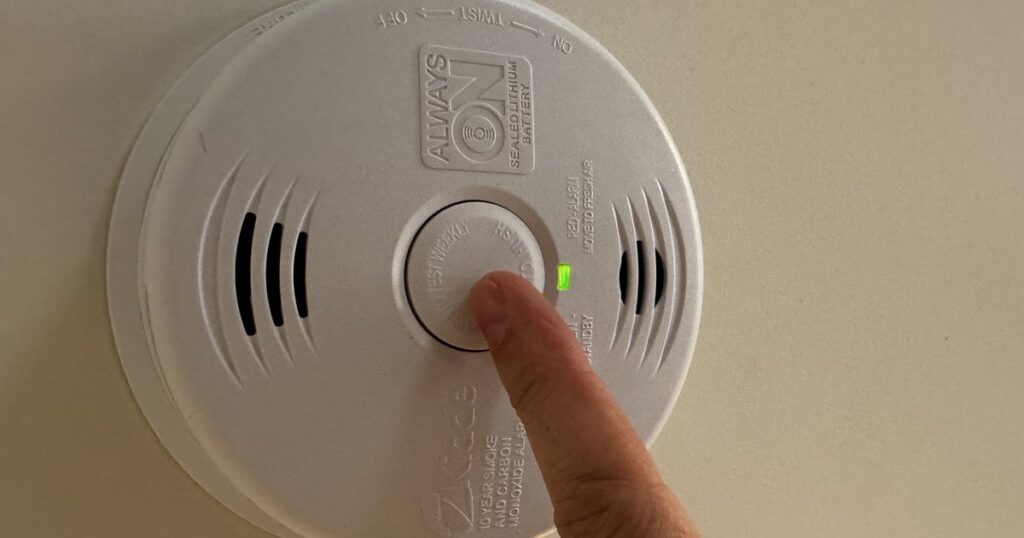
Every home sale in Wellesley needs one. Almost nobody thinks about the Wellesley smoke inspection until two weeks before closing, and by then the calendar has already made the decision for you.
The inspection, formally a 26F smoke and carbon monoxide inspection, is required before any residential property transfers. The Fire Department issues a certificate of compliance when the house passes, and your closing attorney will need it at the table. No certificate, no closing.
I have spent more than twenty years in construction and I hold a general contractor’s license, so I have opened a lot of ceilings and installed a lot of alarms. What follows is the process, the current fees, and the specific reasons Wellesley sellers fail this inspection and have to do it twice.

What a Wellesley Smoke Inspection Covers at Sale
Massachusetts General Law chapter 148, section 26F requires a smoke alarm certificate on the sale or transfer of most residential property. Section 26F½ adds the carbon monoxide requirement. In Wellesley, the Fire Department handles both in a single visit and issues one certificate.
One nuance worth knowing: the transfer law technically applies to homes built or modified before January 1975. In practice it applies to everyone, because purchase and sale agreements and most lenders require the certificate regardless of the home’s age, a point the state makes in its own guidance. Plan on the inspection no matter when your house was built.
The inspector is verifying four things:
- Your street number is visible from the road, as required under MGL c.148 §59
- The correct type of alarm is installed in each required location
- Every alarm works and none has passed its expiration date
- Any monitored low-voltage system is in test mode with someone present who can operate the keypad
That last one is not a formality. Inspectors may pull alarms off the ceiling to read the manufacture date on the back, and a monitored system that trips a central station mid-inspection ends the appointment. The state publishes its own preparation guidance at Mass.gov, and it is worth ten minutes before you book.
Wellesley Smoke Inspection Fees and Timelines
Verified against the Town of Wellesley Home Sale Inspections page:
- Single family: $50
- Two family: $100
- Three to five family: $150
- Six units and above: $500
Pay by credit card when you schedule, or bring a check made out to the Town of Wellesley to the inspection.
Scheduling is online only. Wellesley no longer books these by phone. Applications go through the town’s permitting portal, and the Fire Department contacts you within two to five business days to set the appointment.
Inspections run Monday through Thursday, 9:30 to 11:30 am, on the half hour. Slots are first come, first served. That is eight hours of availability per week for every property transferring in town, which is why the next section matters more than the fee.
The Two Smoke Certificate Deadlines That Cause Problems
Book your 26F inspection at least 10 business days before closing
The town asks for ten business days. That is two full calendar weeks, and it assumes you get a slot on the first pass. In a busy stretch, late spring and late June especially, it can run longer.
The smoke certificate is good for 60 days
Here is the collision almost nobody plans for. Sixty days of validity against a typical 30 to 45 day contract-to-close window looks comfortable. It stops being comfortable the moment your closing extends.
Financing delays, a title issue, a lender that needs one more document, a buyer’s rate lock that has to be redone. Any of those can push a closing three weeks. If the certificate expires, you pay the fee again and re-enter a first-come queue that runs four mornings a week.
Practical rule: if your closing is more than 45 days out when you sign the P&S, wait a beat before booking. Schedule so the certificate lands with room on the back end, not the front.
Why Wellesley Homes Fail the Smoke Inspection
This is where a contractor’s read is more useful than a checklist. In my experience the failures cluster into seven patterns.
Expired alarms that still work fine
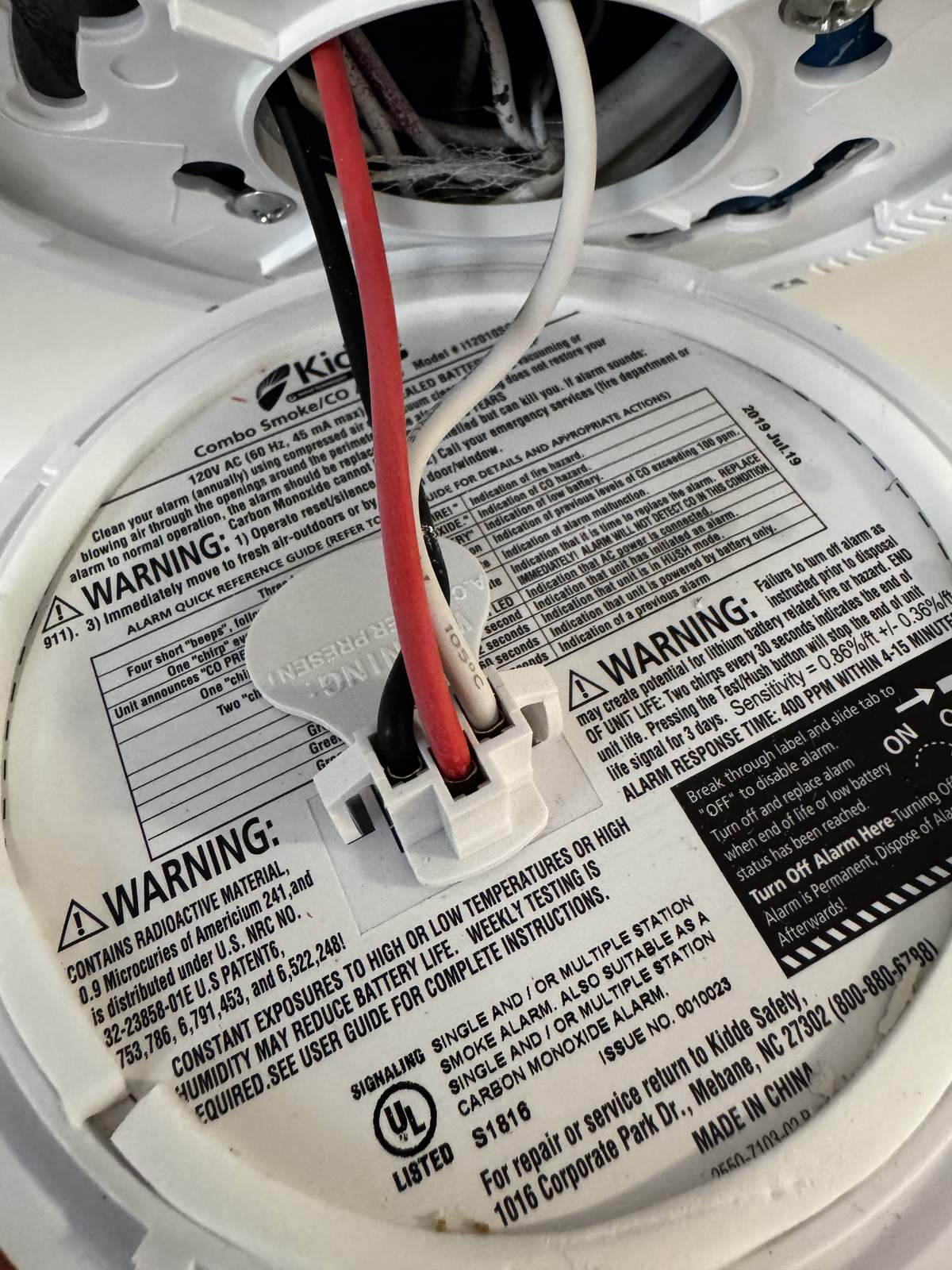
The most common failure by a wide margin. Smoke alarms expire ten years from the date of manufacture. CO alarms expire at seven. The date is printed on the back of the unit, not the front, and an alarm that chirps and passes a test button can still be four years past its date. And if there is no date printed on the back at all, the state’s guidance is to treat the alarm as more than ten years old and replace it.
Take one down and read it before you book. If the house was last sold nine or ten years ago, assume every alarm is due.
Recent renovation work
This one I see constantly and sellers never expect it. A kitchen remodel, a bathroom addition, a finished basement, a wall that came down to open a floor plan. Any of those can change where alarms are required, and the trades who did the work were not thinking about a resale inspection three years later.
If you have renovated since you bought, have the alarm layout looked at before you list. Not before you close, before you list.
Wrong alarm type near kitchens and baths
Massachusetts requires photoelectric technology for any smoke alarm within 20 feet of a kitchen or a bathroom containing a tub or shower, because steam and cooking exhaust cause nuisance trips on ionization sensors. Homeowners replacing a chirping alarm at the hardware store grab whatever is on the shelf and install a unit that will not pass.
Not sure which type you have? Take the alarm down and look at the back. If you see the word AMERICIUM or a radiation symbol, it is an ionization unit.
Painted or improperly mounted units
A painted alarm housing fails. So does one mounted too close to a wall, a corner, a ceiling fan, or an HVAC supply register. Painters are the usual culprit here, which means a house prepped beautifully for market is more likely to have this problem, not less.
Missing CO coverage on a level
Carbon monoxide alarms are required on every level of the home and near sleeping areas. Finished basements and third-floor bedrooms are the two spots most often missed, particularly in older Wellesley homes where an attic was converted at some point.
No heat alarm in the garage
Homes permitted on or after January 1, 2008, and older homes renovated after that date, need a heat alarm in any garage attached to or under the residence, hardwired and interconnected with the smoke detection system. Garages get forgotten because nobody thinks of them as living space. The inspector does not forget.
Nobody home who can run the alarm panel
Covered above, and worth repeating because it is entirely preventable. If the house has a monitored system and the sellers have already relocated, arrange for someone with the code and the account access to be there. Not the stager. Not a lockbox.
Which Rules Apply? It Depends on When Your Home Was Permitted
Massachusetts smoke alarm requirements depend on the building permit date, not the age of the neighborhood. A 1920 colonial that was gut-renovated in 2015 is held to the 2015 standard, because the permit for the renovation resets the clock. The inspector performing your Wellesley smoke inspection applies the standard for your home’s permit era, and the state lays the eras out in its consumer guide to smoke and CO requirements.
| Permit era | What it means for smoke alarms |
|---|---|
| Before 1975 | Battery power is allowed. Alarms go on every habitable level, in the basement, at the base of each stairway, and outside each sleeping area. Any new or replacement alarm must be photoelectric with a hush feature, and battery models need sealed 10-year batteries. |
| 1975 to August 1997 | Hardwired and interconnected. One alarm per habitable level, at the base of each stairway, outside sleeping areas, and at least one per 1,200 square feet of living space per level. |
| August 1997 to 2008 | Adds an alarm inside every bedroom, hardwired and interconnected with battery backup. Photoelectric required within 20 feet of a kitchen or full bathroom. |
| 2008 to February 2011 | Adds the heat alarm requirement for attached or under-residence garages. |
| February 2011 and later | All smoke alarms must be photoelectric, hardwired and interconnected with battery backup. |
Carbon monoxide alarms follow one rule in every era: every level of the home, including habitable portions of basements and attics, located within 10 feet of each bedroom door. Combination units are allowed, and they must have both a tone and a simulated voice alarm so occupants can tell which emergency is which.
These are the typical requirements the state publishes for one- and two-family homes, and renovations or fire warning systems can change the picture. When in doubt, the Wellesley Fire Prevention office is the final word.

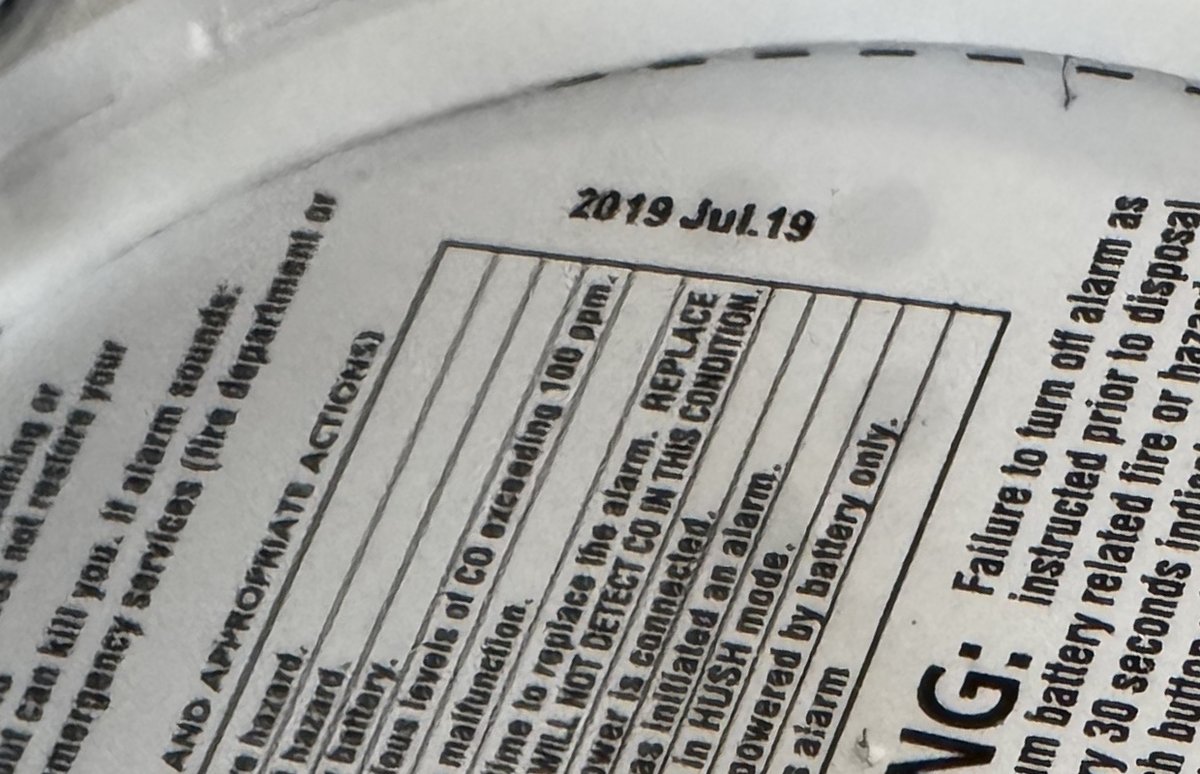
The manufacture date is printed on the back, not the front. This unit was made July 2019, so it passes until July 2029.
Your Closing-Ready Smoke Certificate Checklist
When you sign the P&S
- Confirm your closing date and count backward. Ten business days is the floor, not the target.
- Take down one smoke alarm and one CO alarm. Read the manufacture dates.
- Walk every level and count. Note anything missing, painted, or oddly placed.
- List any renovation completed since you bought the house.
Within the first week
- Replace anything expired or questionable. Replacing an alarm costs a fraction of a second inspection fee plus a second morning.
- Confirm your street number is visible from the road. Overgrown shrubs and a faded number on a mailbox both fail.
- If you have a monitored system, identify who will be on site and confirm they can put it in test mode.
Schedule your Wellesley smoke inspection
- Submit through the Town of Wellesley permitting portal.
- Expect contact within two to five business days.
- Hold Monday through Thursday mornings open on your calendar until the slot is set.
On 26F inspection morning
- Have the house accessible on every level, including the basement and attic.
- Clear anything blocking access to an alarm.
- Have your payment ready if you did not pay online.
- Be present, or have someone present who knows the house.
After you pass
- Send the 26F certificate to your closing attorney immediately.
- Note the 60-day expiration on your calendar.
- If the closing moves, check that date before anything else. This is one of the quieter steps in the escrow and inspection sequence, and it is the one that expires.
Frequently Asked Questions
What is a 26F inspection?
It is the smoke and carbon monoxide alarm inspection required under Massachusetts General Law chapter 148, section 26F before most residential property sales. The local fire department performs it and issues a certificate of compliance that your closing attorney needs at the closing table.
How much does a Wellesley smoke inspection cost?
Fifty dollars for a single-family home. One hundred for a two-family, one hundred fifty for three to five units, and five hundred for six units and above. Pay by credit card when scheduling or by check to the Town of Wellesley at the inspection.
How long is a Wellesley smoke certificate valid?
Sixty days from the date of issue. If your closing is postponed past that window, the certificate expires and you will need to schedule and pay for a new inspection.
How far in advance should I schedule?
At least ten business days before your closing date. The Fire Department responds within two to five business days to set the appointment, and inspection slots run only Monday through Thursday from 9:30 to 11:30 am.
Can I schedule a Wellesley smoke inspection by phone?
No. Wellesley moved 26F scheduling entirely to its online permitting portal and no longer books these appointments by phone.
When do smoke and CO alarms expire?
Smoke alarms expire ten years from the manufacture date and carbon monoxide alarms expire seven years. The date is printed on the back of the unit. An alarm that still responds to the test button can be expired and will fail inspection.
Do all my smoke alarms need to be photoelectric?
In homes permitted on or after February 4, 2011, yes. In older homes, photoelectric is required within 20 feet of a kitchen or a bathroom with a tub or shower, and any replacement alarm in a pre-1975 home must be photoelectric with a hush feature. When replacing like for like, choose photoelectric.
What is the most common reason sellers fail?
Expired alarms. Second most common is a missing or incorrectly placed unit after a renovation, because remodeling changes where alarms are required and the work is rarely revisited before a sale.
Does a condo need a smoke certificate in Wellesley?
Requirements vary with building type and how the association is structured. Confirm directly with the Wellesley Fire Prevention office before you assume the association’s certificate covers your unit.
One Less Thing to Worry About
Most of what goes wrong here is a calendar problem wearing a compliance costume. Sellers find out about the requirement late, book late, discover an expired alarm on inspection morning, and lose ten days they did not have.
If you are preparing to sell in Wellesley, the Wellesley smoke inspection belongs on your list the week you decide to list, not the week you go under agreement. I walk this with every seller I represent, along with the rest of the pre-market punch list that is far cheaper to handle before photos than after an offer. Buyers reading along can see how this fits the larger picture in my guide to what a Wellesley home inspection covers.
Reach out if you want a read on what your house will need before it goes on the market.
Last verified against Town of Wellesley published requirements and the Massachusetts Department of Fire Services consumer guide: August 31, 2026. Municipal fees and procedures change. Confirm current details with the Wellesley Fire Department before scheduling.