


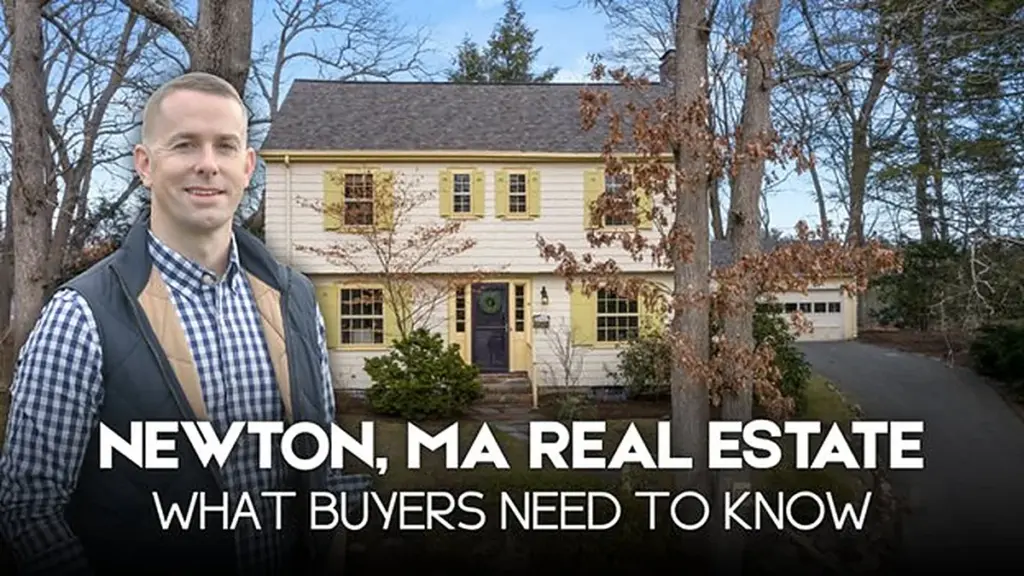
If you have started looking at Newton MA real estate, one thing becomes clear fast. Many of the homes you tour will be older. Most of Newton’s single-family inventory dates to between 1900 and 1960. The pre-1900 homes cluster in Nonantum, West Newton, and Newton Upper Falls. Grand 1920s estates fill Chestnut Hill and Newton Centre. That mix is part of what makes Newton special. It also means buying here is a different kind of evaluation than buying new construction.
I grew up in West Newton and graduated from Newton North High School. I then spent over 20 years running a high-end residential remodeling company. We specialized in renovating and restoring historic homes across Newton and the surrounding MetroWest Boston communities. That construction background is the lens this guide is written through. Today I work as a Global Real Estate Advisor with Gibson Sotheby’s International Realty. I bring that perspective into the showings, the inspections, and the negotiations of buying a Newton MA older home.
My work has earned a place in the RealTrends Top 1.5% of agents nationwide. That record includes 90+ successful transactions, 50+ five-star Google reviews, and 25+ five-star Zillow reviews. I have walked many buyers through the evaluation that older Newton homes require. This guide breaks down what to look for, what to budget for, and the inspection red flags that most generalist agents miss.
Why Newton MA Older Homes Are Different
Across the Boston suburbs, older housing stock is plentiful. What makes Newton distinctive is the range. The city’s 13 villages developed across very different eras, and each carries its own architectural fingerprint.
Nonantum and parts of West Newton have mid-1800s mill-worker homes built around the original Newton industrial economy. Newton Centre and Chestnut Hill carry concentrations of grand Victorian, Tudor, and early colonial estates from the 1890s through the 1930s. West Newton has a mix of Second Empire and Queen Anne Victorians alongside Craftsman bungalows and mid-century capes. Auburndale and Newton Highlands have homes from every decade since 1860 on adjacent streets. Oak Hill is the exception. Builders developed it largely after WWII, and most homes there date to the late 1940s and 1950s.
For a deeper look at how the housing stock varies village by village, see my guide to all 13 Newton MA villages. For context on Newton’s historical neighborhoods, the Newton Historical Commission maintains documentation on the city’s architectural heritage.
That range matters. The construction era of a Newton older home drives almost everything else: foundation, framing, electrical, plumbing, insulation, and ownership cost. Picture a buyer touring an 1870 Nonantum home and a 1955 Oak Hill cape on the same Tuesday. Those are two fundamentally different objects, even if both list at $1.4M.
What I Look For When Touring Older Newton Homes
When I walk into an older home with a client, I am not focused on paint color, staging, or kitchen finishes. Those are easy to change. I am looking at the things that drive long-term ownership cost.
The first thing I read is how the home has been maintained over time. Has it been updated in phases, with care and proper permits? Or has everything been deferred for the next owner? That single question often predicts whether a home is a thoughtful purchase or an expensive lesson.
The second thing I evaluate is layout efficiency. Many Newton older homes have great bones, but the original floor plans reflect how people lived in 1910, not 2026. The question becomes: can the layout be improved without major structural changes? Sometimes a small wall removal transforms the home. Sometimes the structure makes that change cost six figures.
And then there is the bigger picture: location, lot size, surrounding homes, and the trajectory of the village. Even if a Newton older home needs work, those fundamentals are what protect the investment over a 10-year hold.
The Five Systems That Matter Most
For Newton MA older homes specifically, five system-level items drive most of the long-term ownership cost. Cosmetic finishes are negotiable. These are not.
Foundation
Foundation type and condition vary widely across Newton’s housing stock. Pre-1900 homes commonly have rubble-stone foundations with no concrete and limited moisture protection. Homes from 1900 through 1940 often have field-stone or brick foundations. Homes from 1940 through 1970 typically have poured concrete or concrete block. Each has different evaluation criteria.
A rubble-stone foundation is not a defect. Many are perfectly sound after 150 years. What I look for is evidence of differential settlement, water intrusion, and how the home has handled the foundation’s natural breathing over time. A 1958 poured-concrete foundation with cracking and active moisture is often the bigger problem. A stone foundation with proper drainage and a clean basement can easily outperform it.
Roof and Envelope
Roof material and age, gutter and downspout condition, siding integrity, and window condition collectively make up the building envelope. On Newton older homes, the envelope is where deferred maintenance shows up first and costs the most to correct. Slate and copper roofs from the early 1900s can have decades of life left if maintained, but require specialty roofing knowledge that most contractors lack. Original wood double-hung windows can be
Electrical
This is where older Newton homes carry the most safety and insurance risk. Knob-and-tube wiring was the standard from roughly 1880 to the 1940s. It still persists in the walls and ceilings of many Newton homes that no one ever fully rewired. On its own, the wiring is not inherently dangerous. It does turn brittle with age, it does not pair safely with modern insulation, and most carriers will not write a policy on a home with active knob-and-tube. Service capacity also matters. A 60-amp panel from the 1940s is undersized for any modern household. Federal Pacific and Zinsco panels carry known fire risks, and most carriers treat a home as uninsurable until an electrician replaces the panel.
Plumbing
Original galvanized steel supply lines from the early 1900s eventually corrode from the inside, restricting flow and causing leaks at threaded fittings. Cast iron drain lines from the same era are more durable but eventually fail at joints and elbows. Builders used polybutylene plumbing in many homes from roughly 1978 to 1995. It has documented failure rates and is a known insurance concern. Copper supply lines from the 1960s through today are generally reliable. PEX is the current standard. On any Newton older home, I want to know what is behind the walls before the offer is written.
HVAC
Older Newton homes often have heating systems that have been layered over the decades. The original 1920s steam radiator system may still be in place. A 1980s baseboard hot-water loop might serve a second-floor addition, with a 2010s mini-split cooling the finished basement. Each system has different efficiency, different lifespan, and different replacement cost. A single-system replacement on a 4,000 square foot Newton older home typically runs $25,000 to $60,000. The figure depends on system type and whether the house needs new ductwork where none currently exists.
Renovation Costs in Newton MA, 2026
Renovation costs in Newton run higher than national averages because of labor market pressure, materials costs, and the complexity of working in older homes. Based on active 2025 to 2026 projects across Newton and the surrounding MetroWest Boston communities, here is the calibration I share with buyers:
- Cosmetic refresh: $75,000 to $150,000. Paint, finishes, light updates to kitchen and baths, refinished floors.
- Kitchen and primary bath renovation: $200,000 to $400,000 depending on scope, finishes, and structural complexity.
- Whole-house systems replacement: $150,000 to $400,000 (electrical, plumbing, HVAC, insulation, envelope work).
- Full gut renovation including addition: $500,000 to $1.5 million and up.
- Newton-specific premium: add 10% to 15% to most national benchmarks for the same scope of work.
- Active knob-and-tube wiring: often present in attic, basement, and original second-floor walls of homes built before 1945. Frequently invisible from the panel side because portions have been rewired and portions have not.
- Asbestos transite pipe: common in heating supply and return ducts from the 1930s through the 1960s, and in some water and sewer lines. Not a deal-breaker, but remediation has a real cost.
- Polybutylene plumbing: identifiable by gray plastic supply lines, typically installed between 1978 and 1995. Known failure mode. Insurance carriers are increasingly excluding coverage.
- Federal Pacific or Zinsco electrical panels: documented fire risk, and most insurance carriers will not write coverage until the panel is replaced. Panel replacement runs $3,000 to $6,000.
- Balloon framing implications: standard in Newton homes built before 1940. Not a defect, but it changes how renovations get planned, where fire-blocking has to be added, and what an addition will actually cost.
- Focusing too much on cosmetic finishes and not enough on systems and structure.
- Underestimating renovation timelines and budgets, especially in homes that need permits for electrical and plumbing updates.
- Rushing inspections or skipping specialty inspectors (electrical, structural) that older homes specifically benefit from.
- Assuming all older Newton homes carry the same level of risk when the housing stock spans 150 years of construction methods.
- Waiting too long to engage a contractor-credentialed advisor until after an offer is accepted and the inspection surprises arrive.
The math that has to work: purchase price plus realistic renovation cost should stay below comparable updated sales in the same Newton village. If it does not, the project is not the deal it looks like on paper. This is where my construction background changes the conversation. I can walk a property and tell you what the work will actually cost, not what an online estimator says it might cost.
Inspection Red Flags Most Agents Miss
A standard home inspection in Newton catches the obvious items. What it often misses are the specific construction-era issues that drive the largest unexpected costs. Five flags I always check personally:
These are the things that separate a careful walkthrough from a generic showing. A licensed contractor brings a different kind of evaluation to a real estate transaction. For a deeper look, see my piece on what a licensed contractor sees that most buyers miss.
Renovate or Buy Move-In Ready
The most important question on any Newton older home is whether the renovation math actually works.
Move-in-ready homes in Newton command a meaningful premium. A fully renovated 1920s colonial in Newton Centre at $2.8M might sell within 30 days. Unrenovated at $2.0M, that same home might sit 90 days. That $800,000 gap is how the market prices the renovation. Your real question is whether you can do the work for less than $800,000 and end up with a home you want to live in.
For some buyers, taking on a renovation is genuinely the right move. The numbers work, the timing works, and the home that emerges is more tailored than anything available on the open market. For others, the predictability of buying renovated is worth the premium. There is no universal right answer. The right answer is property-specific, and that is exactly the conversation I have with buyers before any offer goes in.
Location Still Outweighs Condition Over Time
The longest-lasting truth in Newton real estate is that location drives value more than condition does. A well-located Newton older home with renovation potential will frequently outperform a fully updated home in a less competitive village over a 10-year hold. You can renovate a home. You cannot move it.
Newton Centre, Chestnut Hill, West Newton, and Waban all have strong long-term appreciation regardless of individual property condition. Steady appreciation runs through Newton Highlands and Auburndale, with some property-by-property variability. Upper Falls sits mid-transition because of the Pattern District (formerly Northland) development and is worth watching closely. Nonantum and Newton Lower Falls offer the most accessible Newton entry points but with somewhat slower historical appreciation rates.
For a complete read on how each Newton village performs in the market, see my Newton MA villages guide.
Mistakes I See Buyers Make
A few patterns come up consistently when buyers approach Newton older homes:
The goal is to understand the actual home before making an offer. You do not want the inspection to reveal a $75,000 surprise you could have priced in from the start.
Final Thoughts on Buying Older Homes in Newton
If your goal is to navigate Newton MA real estate with confidence, the work is making informed decisions rather than fast ones. That is especially true with older homes. These properties can offer strong locations, long-term value, and the ability to create something tailored to your life, but they require a thoughtful approach.
With the right guidance, you can identify opportunities that make sense, avoid unnecessary risks, and move forward with confidence. Maybe you are evaluating whether an older Newton home is the right move. Maybe you want clarity on what to look for in a specific village. Either way, having that conversation early makes the whole process more efficient and more strategic.
Whether you are buying, selling, or relocating, I would welcome the chance to walk you through it.
Browse Newton MA homes for sale | Let’s connect
Paul Neavyn is a Global Real Estate Advisor with Gibson Sotheby’s International Realty, based at 54 Central Street in Wellesley, MA. Born and raised in West Newton, Paul is a graduate of Newton North High School. He brings a rare second credential to the work: an active general contractor’s license. That license caps 20+ years running a high-end residential remodeling company. The company specialized in renovating and restoring historic homes across Newton and the surrounding MetroWest Boston communities. Recognized in the RealTrends Top 1.5% of agents nationwide with 90+ successful transactions, 50+ five-star Google reviews, and 25+ five-star Zillow reviews. He specializes in Newton, Wellesley, Weston, Brookline, Southborough, Hopkinton, and the surrounding MetroWest Boston communities.