


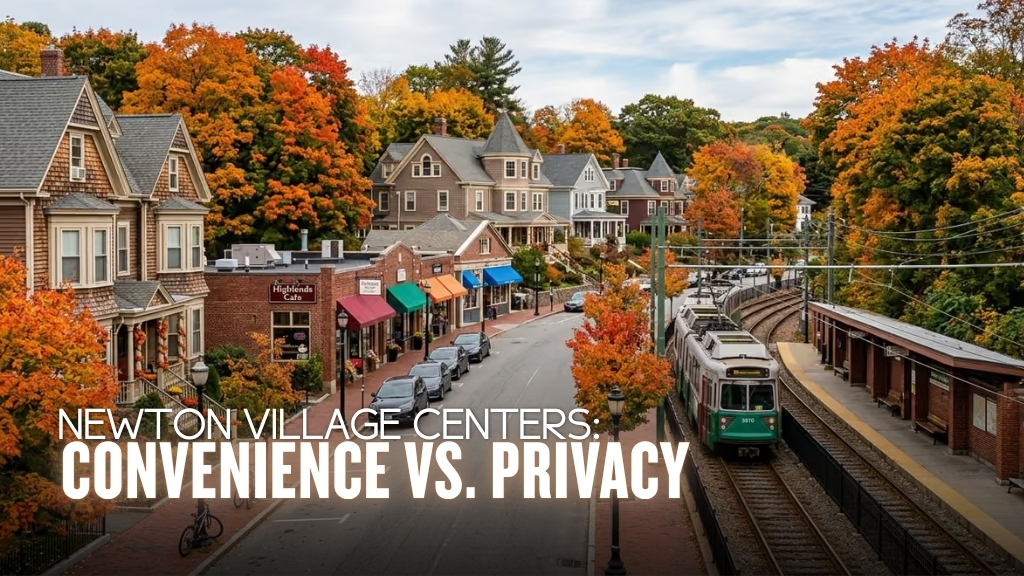
Living near a Newton village center can make daily life feel easier. Coffee, dinner, transit, parks, and neighborhood services may all be within walking distance instead of requiring another trip in the car. That convenience can be valuable, but it often comes with trade-offs.
Newton is not built around one downtown. Its 13 villages developed around different combinations of railroads, rivers, mills, commercial areas, and historic settlement patterns. As a result, buying near Newton Centre can feel very different from living close to Waban, Newtonville, West Newton, Newton Highlands, or Auburndale.
The real question is whether the advantages of village-center living match the way you actually expect to spend your week.
Walkability Can Simplify Everyday Life
One of the clearest benefits of living near a village center is being able to complete some errands without driving.
Newton’s commercial centers offer different combinations of restaurants, shops, pharmacies, offices, groceries, and neighborhood services. Some feel busy and active, while others are smaller and more residential.
Newton Centre and Newton Highlands Put More Within Reach
Newton Centre attracts buyers who want a larger concentration of restaurants, shops, services, gathering spaces, and Green Line access. Newton Highlands offers a smaller but recognizable center with restaurants, neighborhood businesses, and its own Green Line station.
In both areas, “walkable” deserves an in-person test. A home may look close on a map but involve hills, busy crossings, limited sidewalks, or a route that feels less convenient with groceries, children, or winter weather.
As a top-performing Newton-area real estate professional, I have helped buyers realize that proximity only matters when they will actually use it. A short walk to shops may be worth a smaller yard to one household and barely matter to another.
Transit Access Only Helps When the Full Commute Works
Newton offers both Green Line and commuter-rail service, but access varies by village and property. Newton Centre, Newton Highlands, and Waban are served by the Green Line. Newtonville, West Newton, and Auburndale have commuter-rail stations. Buyers should confirm current routes and schedules through the MBTA.
The Station Is Only One Part of the Trip
A home near transit may sound ideal, but buyers should consider the full commute. How long is the walk? Is parking needed? How often do trains run? Will there be transfers? How far is the final destination from the arrival station?
Someone commuting several days a week may place significant value on station access. A hybrid worker may prefer a quieter street or larger lot, even if the station is farther away. Living near rail service may also bring train noise, station activity, crossing signals, or more traffic during commuting hours. Buyers should visit while trains are running rather than relying only on maps.
Older Homes Often Come With Village-Center Convenience
Many neighborhoods near Newton’s village centers were established before open floor plans, attached garages, large primary suites, and extensive storage became common buyer expectations. That history is part of the appeal. Buyers may find Colonials, Victorians, Tudors, multifamily homes, condominiums, and properties with original details that are difficult to reproduce today.
Character May Require More Work
An older home may offer detailed woodwork, fireplaces, mature landscaping, and an established streetscape. It may also have aging electrical systems, older windows, limited insulation, smaller kitchens, or additions that do not flow naturally.
With more than 20 years of building and renovation experience, I can help buyers distinguish between a home with manageable updates and one requiring a much larger investment. Not every older layout needs to be completely opened up. Separate offices, dining rooms, and living spaces can provide privacy and functionality that some modern homes lack.
Smaller Lots May Be Part of the Deal
Homes near village centers often sit on more compact lots than properties farther into residential neighborhoods. That may mean less privacy, shorter setbacks, limited driveway space, and closer neighboring homes. It can also mean less landscaping, easier maintenance, and simpler snow removal.
Usable Space Matters More Than Acreage
A smaller, level backyard may work better than a larger lot with steep slopes, drainage concerns, or difficult maintenance. Buyers should consider whether the outdoor space supports their actual priorities. Is there room for dining, gardening, pets, or children? Does the yard receive enough sunlight? Is it private enough for everyday use?
Buyers who want deeper setbacks and larger yards may naturally find more options farther from shops and transit.
Traffic and Parking Can Change by the Hour
Village centers create activity, and activity brings vehicles, pedestrians, deliveries, and parking demand. A quiet street during a midday showing may feel very different during the morning commute, school pickup, or a busy restaurant evening.
Street Parking Deserves a Real Test
Some homes near village centers have small driveways, limited guest parking, or no garage. Buyers should understand street restrictions, winter parking rules, and where visitors would park. Touring at different times can reveal whether the location feels comfortably active or consistently crowded.
Mixed-use properties can also create both convenience and movement. Living near shops or restaurants may mean deliveries, trash pickup, exterior lighting, customer traffic, or outdoor seating. Those features are not automatically negative. The important thing is understanding how they affect the immediate property.
Each Village Offers a Different Version of Convenience
Village-center living does not look the same across Newton. Newton Centre may appeal to buyers seeking a larger concentration of dining, services, gathering spaces, and Green Line access.
Newton Highlands and Waban provide smaller-scale centers with transit and surrounding residential streets. Newtonville and West Newton combine commuter-rail access with visible commercial corridors. Auburndale offers a mix of historic housing, road connections, commuter rail, and proximity to the Charles River.
These are not rankings. They show why buyers should avoid treating all village centers as interchangeable.
Nearby Zoning Is Worth Understanding
Newton’s Village Center Overlay District was adopted in December 2023. It allows additional by-right housing and commercial opportunities in designated areas near transit, services, and village amenities.
The zoning does not require redevelopment and does not guarantee that a nearby parcel will change. It simply creates additional possibilities for eligible properties. Buyers should review zoning maps, current proposals, and nearby land uses before purchasing close to a village center.
A parking lot, commercial building, or older multifamily property may have different development options than the buyer first assumes. The goal is not to predict future construction. It is to understand what may legally be possible.
Decide Which Daily Experience Fits You
Village-center living may make sense when you genuinely expect to use transit, restaurants, parks, shops, and neighborhood services regularly. It may feel less appealing when your priorities center on privacy, larger yards, quiet streets, extensive parking, or greater separation from commercial activity.
Before narrowing the search, ask yourself:
- How often would I realistically walk into the village?
- Is transit essential or simply convenient?
- Would pedestrian or road activity bother me?
- How much privacy and outdoor space do I need?
- Am I comfortable maintaining an older home?
- Would I accept driving more often in exchange for greater space?
The answer usually becomes clearer after touring both village-center homes and quieter residential properties within the same budget.
Tour Both Lifestyles Before Choosing
A home near a Newton village center can offer daily convenience that is difficult to recreate on a more isolated street. It can also involve older housing, smaller lots, more activity, limited parking, and less privacy. Neither experience is universally better.
Walk to the train. Visit during rush hour. Test the route to shops and restaurants. Stand in the backyard and listen. Then compare that experience with a quieter property farther from the center.
Thinking about buying near Newton Centre, Newton Highlands, Waban, Newtonville, West Newton, Auburndale, or another Newton village? Contact Paul Neavyn to compare village-center homes with more residential options and decide which trade-offs make the most sense for your daily life.
FAQs
Is it more expensive to buy near a Newton village center?
It can be, particularly when buyers value walkability, transit, shops, and services. Pricing still depends on the home’s condition, size, lot, architecture, and road exposure.
Which Newton village centers have rail access?
Newton Centre, Newton Highlands, and Waban have Green Line access. Newtonville, West Newton, and Auburndale have commuter-rail stations.
Are homes near village centers usually older?
Many are older because the neighborhoods developed around historic transportation and commercial centers. Newer homes and condominiums may also be available.
Does the Village Center Overlay District guarantee more construction?
No. The overlay creates additional development options for eligible properties, but it does not require redevelopment or guarantee approval of a particular project.
How can buyers decide whether village-center living is right?
Compare homes near village centers with properties on quieter streets. Evaluate walkability, transit, lot size, privacy, parking, traffic, and housing condition.
About Paul Neavyn
Paul Neavyn combines extensive Newton-area real estate knowledge with more than 20 years of building and renovation experience. That background helps buyers evaluate price, condition, repair needs, negotiation risks, and long-term value.
Ranked among the top 1.5% of real estate professionals nationwide by RealTrends, Paul has completed more than 90 successful transactions. His candid, client-focused guidance has earned more than 57 five-star Google reviews and 27 Zillow reviews.
Whether a buyer wants to live close to transit and shops or prefers a quieter street with more land, Paul helps clients compare the real trade-offs before choosing where to focus their Newton search.